
What Pokémon Go Scans Mean for Drone Filmmakers
Crowdsourced scan data from a mobile game quietly trained military drone navigation. Here's what that means for your aerial filmmaking kit.
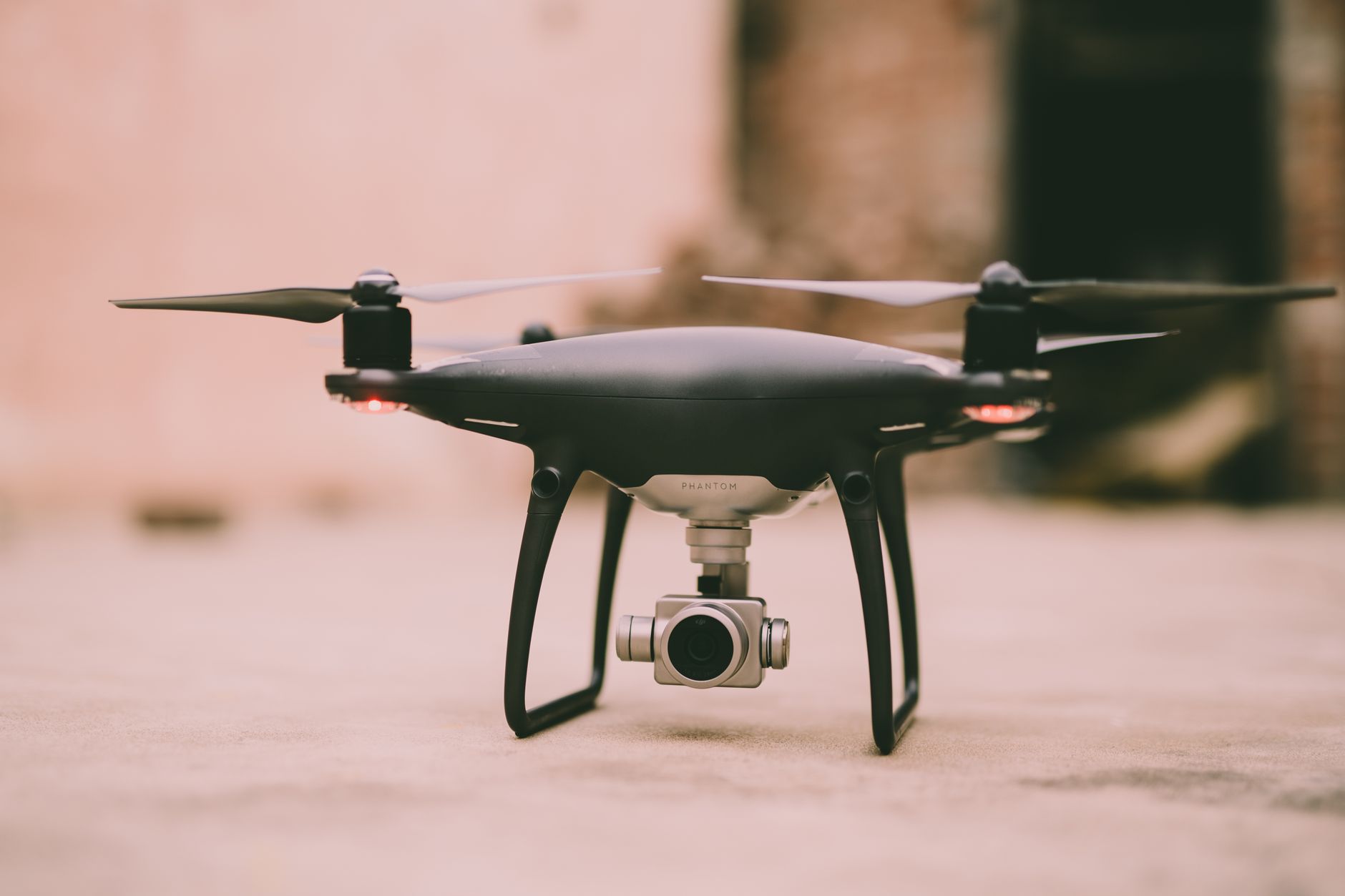
Millions of players scanned real-world environments through a mobile game, and that data reportedly ended up training navigation systems now headed into military drones. That's the story breaking in 2026, and it raises questions every drone filmmaker should be sitting with. Not about geopolitics. About the technology inside your gimbal-mounted aerial rig and where it's actually coming from.
How Photogrammetry Connects Games to Drones
The link isn't as strange as it sounds. Photogrammetry (the process of building 3D spatial maps from overlapping 2D images) is the same core technology behind civilian drone navigation, autonomous obstacle avoidance, and the visual positioning systems in prosumer drones like the DJI Matrice 4E. When players pointed their phones at buildings, parks, and street corners to interact with location-based game mechanics, they were unknowingly contributing georeferenced image data. That data, according to multiple reports from DroneXL and NL Times in 2026, was reportedly used to train navigation AI for military UAV (unmanned aerial vehicle) systems.
For filmmakers, the takeaway isn't alarm. It's education. The same spatial reasoning tech that lets a military drone navigate without GPS is what lets your cinematic drone hold a steady position, avoid a tree branch at dusk, and execute a programmed orbit shot around a subject. These systems share DNA.
What This Means for the Gear in Your Pelican Case
You've probably already noticed that drone navigation has gotten eerily good. The DJI Matrice 4E, which made waves in early 2026 for mapping 29 native plant species across 130 hectares in an open-source flora study, uses visual positioning and terrain-following that would have seemed like science fiction five years ago. That capability didn't come from nowhere.
Here's the honest reality: consumer drone hardware benefits directly from the R&D pipelines of defense-adjacent technology development. Sensor fusion (combining data from cameras, accelerometers, barometers, and GPS to build a real-time picture of the drone's environment) has advanced faster in the last three years than in the decade before, partly because of the volume of real-world training data feeding these systems.
The visual navigation systems in today's prosumer drones are trained on billions of real-world image data points, many collected through consumer applications most users never thought twice about.
For you as a filmmaker, that means your aerial rig is smarter than you might give it credit for. But it also means you should understand what's powering it.
Obstacle Avoidance and Shot Execution
Let's get practical. The reason you can now send a drone through a forest gap or track a moving vehicle on a dirt road without a spotter comes down to onboard visual intelligence. These systems process depth from camera feeds in real time, compare that to a mapped model of the surrounding space, and make micro-corrections faster than any human operator.
For filmmakers, this translates directly to shot types that used to require massive crews or were simply impossible:
- Low-altitude tracking shots through dynamic environments like markets, forests, or urban spaces
- Autonomous orbit (also called point-of-interest) moves around a subject with consistent framing
- Return-to-home in low-visibility conditions, like shooting at magic hour when light drops fast
- Terrain-following for landscape cinematography where altitude consistency defines the aesthetic
All of these depend on the same spatial mapping intelligence that is now apparently finding military applications. That's not a reason to distrust your drone. It is a reason to understand what you're flying.
The Data Privacy Question for Location-Based Production
Here's where it gets genuinely interesting for production teams. If crowdsourced mobile game data can train drone navigation systems, what does that mean for the 3D scan data your own productions generate?
Many productions in 2025 and 2026 have incorporated photogrammetry into pre-production, using apps to scan locations and build virtual sets for previsualization (digital pre-planning of shots before you're on location). That data, depending on your agreements with software providers, may not be exclusively yours.
Some questions worth asking your production attorney before your next location scan:
- Who owns the 3D spatial data your scanning app generates?
- Does your software provider's terms of service include data licensing to third parties?
- Are you scanning locations with security sensitivities, such as government buildings, private infrastructure, or restricted airspace zones?
This isn't paranoia. It's the same due diligence you'd apply to any production asset. Your location data has value, and someone else may already know that.
What Stark's New Drones Tell Us About Where Tech Is Heading
Also breaking in 2026, Stark unveiled its Cascade and Gambit drone platforms eight months after reportedly failing military strike trials. The interesting part for filmmakers isn't the failure. It's the pivot. Stark's revised designs reportedly emphasize navigation reliability and environmental awareness over payload performance. That's the civilian drone market's entire value proposition, applied to defense hardware.
Watch that crossover direction carefully. When defense contractors start prioritizing the same specs that DJI and Skydio have been refining for aerial cinematography, it signals that the civilian market has genuinely set the standard. You, and every other filmmaker flying drones on commercial productions, are part of a feedback loop that has shaped what autonomous navigation looks like in 2026.
What That Feedback Loop Means for Buying Decisions
If you're in the market for a new aerial platform right now, the navigation intelligence gap between mid-range and high-end drones has narrowed considerably. A drone at the $2,000 to $3,500 price point in 2026 carries obstacle avoidance and visual positioning that would have been flagship-only in 2023. That's a direct result of accelerated development pipelines driven by both consumer demand and defense investment.
For filmmakers on tight production budgets, that's genuinely good news. The floor for capable, intelligent aerial cinematography gear has dropped.
Flying Smart in a Smarter-Drone World
The Pokémon Go story is a reminder that data flows in directions we don't always see. As a filmmaker using aerial gear, your job isn't to audit every supply chain behind your equipment. But staying informed about what's powering your tools makes you a better operator and a more credible voice when production clients ask about data handling on location.
Fly with intention. Understand your gear beyond the spec sheet. And when the technology inside your drone turns out to have an unexpected origin story, use that as a reason to dig deeper into how it actually works.
Key Takeaways
- Crowdsourced image data from a location-based mobile game reportedly trained navigation AI now used in military drone systems, highlighting how civilian and defense tech share development pipelines.
- The visual positioning and obstacle avoidance in prosumer drones like the DJI Matrice 4E use the same core photogrammetry principles described in the Pokémon Go data story.
- Filmmakers using 3D scanning apps for location previsualization should review data ownership clauses in their software agreements.
- Defense contractors like Stark are now prioritizing navigation reliability specs that mirror civilian cinematography drone standards, confirming that the prosumer market has set a meaningful benchmark.
- The mid-range drone market in 2026 offers navigation intelligence that was flagship-only a few years ago, lowering the entry point for serious aerial cinematography.
Frequently Asked Questions
Q: Does this mean the data from my drone filming sessions could be used for military purposes?
A: Potentially, depending on your drone's software agreements and cloud connectivity settings. Review your drone manufacturer's terms of service, particularly clauses around flight telemetry, visual data, and third-party licensing. Flying in offline mode where your platform supports it limits exposure.
Q: Should filmmakers be concerned about using drones with AI navigation near sensitive locations?
A: Yes, but for practical production reasons as much as anything else. Filming near airports, government buildings, or critical infrastructure already requires permits and airspace authorization. The data your drone's navigation system captures in those environments is an additional layer worth discussing with your production legal team before the shoot.
Q: How does photogrammetry actually improve my drone shots as a filmmaker?
A: Photogrammetry-based navigation lets your drone build a real-time spatial model of its environment, which enables consistent altitude holds, smooth obstacle avoidance, and precise automated flight paths. In practical terms, it's the difference between a shaky manual orbit and a locked, cinema-quality arc shot around your subject.