
Overhead Game Map Shots: The C64 Camera View Technique
Learn how the classic C64 Basic top-down game map perspective translates into a powerful overhead camera technique for modern film and video production.
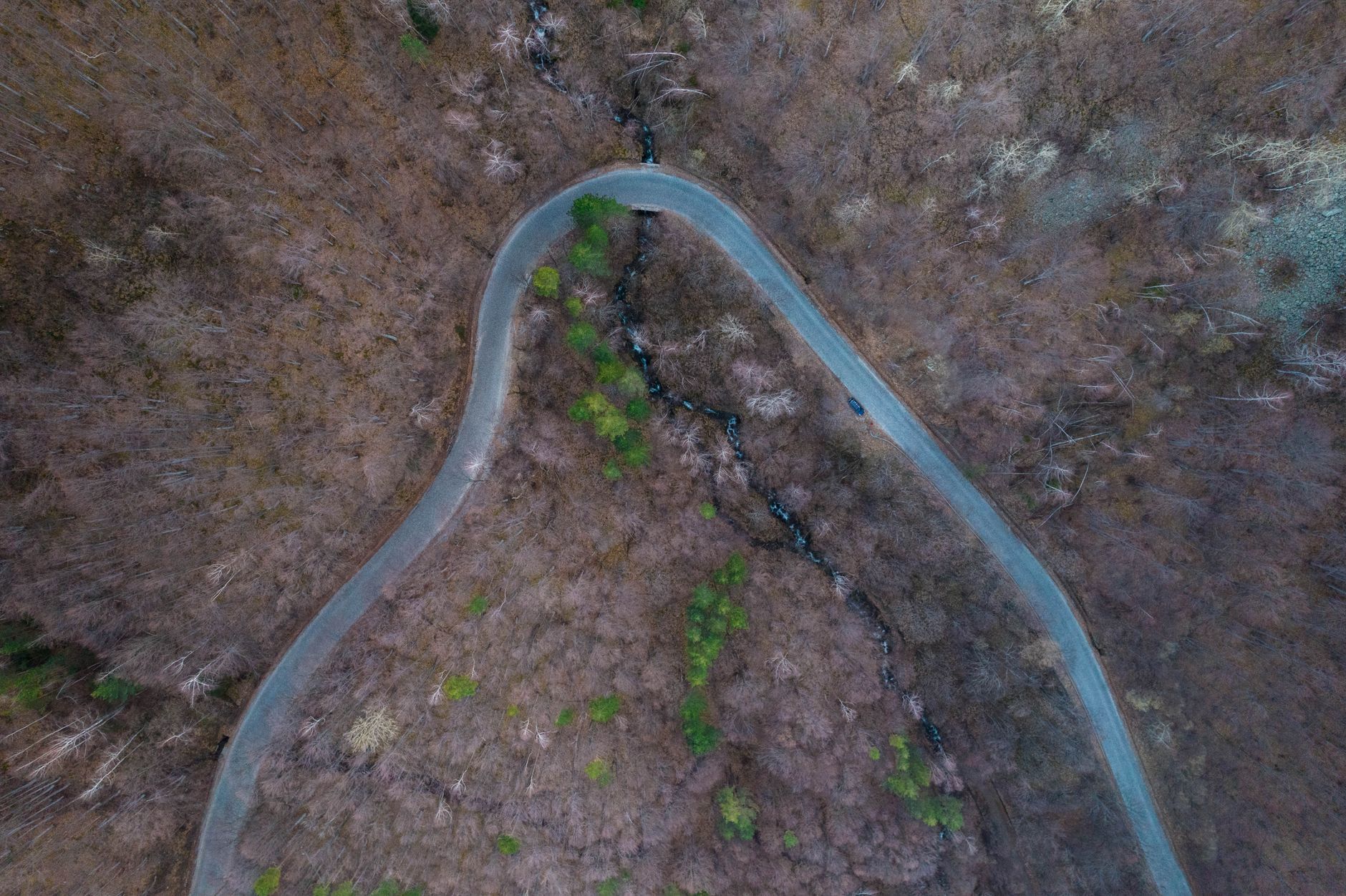
The overhead "game map" camera view, inspired by classic Commodore 64 top-down grid layouts, is one of the most underused compositional tools in a filmmaker's arsenal. Here's how to steal that retro logic and turn it into something cinematic.
What the C64 Overhead View Actually Is
If you ever played games on a Commodore 64, you remember the top-down perspective. Characters moved across a grid-based map, everything was flat, readable, and spatially logical. No perspective distortion. Pure geometry. That's the visual language we're talking about.
In filmmaking terms, this translates to a true overhead shot, also called a bird's-eye view or plan shot. The camera sits directly above the subject, pointed straight down at 90 degrees. No angle. No drama from a tilted axis. Just pure, graphic, map-like composition.
This isn't the same as a high crane shot looking down at an angle. That's an aerial with perspective. The C64 game map look is orthographic (meaning the camera captures the scene with minimal depth distortion, like a flat map rather than a three-dimensional perspective view). Think of it as treating your frame like graph paper.
Why This Shot Works So Powerfully
The overhead map view strips subjects of their verticality. People become shapes. Cars become rectangles. Crowds become patterns. That reduction is where the power lives.
Directors like Jacques Demy and Steven Soderbergh have used true overhead shots to choreograph movement in ways that feel almost mathematical. When you remove the human height dimension, you're left with motion paths, color blocks, and negative space. The viewer's brain processes it differently, closer to reading a diagram than watching people move through a room.
For music videos especially, this shot is a workhorse. You've probably seen it used for dance sequences where bodies create kaleidoscopic patterns. But it works just as well for narrative storytelling when you want to show a character's isolation, surveillance, or helplessness. The overhead view makes people look small and contained, exactly like a game sprite on a grid.
The overhead shot is one of the few camera angles that removes the subject's agency visually. They become objects in a system, and that carries enormous emotional weight.
Gear That Actually Gets You There
Getting a true 90-degree downward shot on a real set requires commitment. Here are your main options depending on budget and production scale.
Rigging a Camera Overhead
For interior shoots, a ceiling rig or cross-bar mount suspended from two C-stands (heavy-duty lighting stands) is the most common low-budget solution. Mount a lightweight mirrorless body up there, something like the Sony FX30 or the Canon EOS R50 Cinema, and tether it via HDMI to a monitor at eye level. You'll need a right-angle HDMI adapter or a long cable routed carefully so it doesn't appear in frame.
For heavier cinema cameras like the ARRI Alexa 35 or RED V-RAPTOR, you need a proper overhead truss system or a dedicated grip rig. Don't improvise with heavy glass overhead. Safety is non-negotiable.
Drone as an Overhead Camera
For exterior game-map-style shots, a drone locked in GPS hover mode is your best friend. The DJI Inspire 3, which is still the workhorse aerial platform heading into 2026, lets you point the Zenmuse X9 gimbal straight down and hold that position with remarkable stability. The challenge is wind. Even a gentle breeze creates drift that breaks the static map illusion. Shoot on calm days or early morning.
For interior drone work, check local regulations and use a prop-guarded unit like the Autel EVO Nano+ or a similar compact caged drone designed for confined spaces.
Periscope Lenses for Tight Spaces
If you're shooting a tabletop scene, a miniature set, or a tight practical location, a periscope lens (a specialty optical attachment that bends the lens axis 90 degrees) lets you position the camera body horizontally while shooting straight down. Laowa makes a dedicated 24mm probe lens that a lot of commercial directors are using for exactly this kind of work in 2025 and 2026 productions.
Lighting the Top-Down Shot
This is where most people get tripped up. Standard three-point lighting (key, fill, and backlight positioned around the subject) is designed for eye-level cameras. When you flip to overhead, all your light sources are now potentially in frame or casting the wrong shadows.
For the game-map look, you want flat, even light with minimal shadowing, or deliberate hard shadows that reinforce the graphic geometry. Think about it this way: in a C64 game, sprites cast no shadows at all. That flatness is part of the aesthetic.
Practically, large softboxes or LED panels (like the Aputure NOVA P600c or Skypanel S60-C) positioned low and bounced off walls or white cards underneath the camera angle can give you that diffused, near-shadowless look. If you want graphic hard shadows that enhance the grid geometry, use a single hard source directly opposite the camera, essentially below your subject if they were standing, which means above them since you're shooting down.
Test your lighting by looking at your monitor before every take. Shadows that look fine from eye level will read completely differently from overhead.
Directing Movement in the Game Map Frame
Here's where the C64 game logic genuinely helps you think like a filmmaker. In those old games, movement was cardinal: up, down, left, right. Diagonal felt like a bonus.
When you block talent for an overhead shot, think the same way. Movement along the horizontal or vertical axis of the frame reads cleanly and powerfully. Diagonal movement reads as dynamic but slightly chaotic. Circular movement reads as hypnotic.
For documentary or narrative work where you can't fully control movement, give your talent a defined path or starting mark. Even a small piece of tape on the floor that they unconsciously follow helps maintain the geometric clarity that makes this shot work.
For choreographed sequences, paper it out first. Literally draw the frame as a grid and map your subjects' paths before you set up the rig. This is exactly what the C64 game designers did, and it's exactly what a good AD (assistant director) will do with you on a bigger production.
Color and Post-Processing for the Retro Map Aesthetic
If you want to lean fully into the C64 game map aesthetic as a stylistic choice, not just a compositional one, the post work is where that happens.
In DaVinci Resolve 19 (the current standard color grading platform in 2026 productions), you can use posterization effects and limited color palettes in the Color page to mimic the restricted color depth of 8-bit displays. Combine that with a slight grid overlay in Fusion (Resolve's built-in compositing module) and you can create sequences that genuinely feel like animated game maps.
This style is showing up in commercial and music video work right now. It's a strong visual language precisely because it's specific, and specific always reads as intentional.
Key Takeaways
- The C64 game map overhead shot is a true 90-degree downward camera angle that creates flat, graphic, map-like composition.
- Lightweight mirrorless cameras on ceiling rigs or GPS-locked drones are your most practical tools for achieving this angle safely.
- Lighting for overhead requires rethinking your entire setup: flat soft light or deliberate geometric hard shadows, not standard three-point setups.
- Block talent movement along cardinal axes (horizontal and vertical) to maintain the clean geometric logic that makes this shot read.
- Post-processing in DaVinci Resolve 19 can extend the aesthetic into full retro game territory if that's your intentional style choice.
Frequently Asked Questions
Q: Can I shoot a true overhead shot without a drone or ceiling rig?
A: Yes, a monopod or extended boom pole with a small camera attached and a Bluetooth remote trigger works surprisingly well for lower ceiling heights. Pair it with a wide-angle lens like a Laowa 9mm to capture more of the floor area. It's not perfectly locked off, but for run-and-gun productions it gets you into the ballpark.
Q: How do I keep verticals straight in post when the camera isn't perfectly level?
A: Use DaVinci Resolve's lens correction tools or the Transform panel to manually adjust pitch and roll until the frame edges are parallel to your subject's geometry. Shooting with a camera that has a built-in horizon level readout, like the Sony FX3 or BMPCC 6K Pro, helps you nail the angle on set and saves time in post.
Q: Does this overhead angle work for interview or talking-head formats?
A: Rarely as a primary angle, but it works powerfully as a cutaway or establishing shot that then cuts down to eye level. It's been used effectively in documentary work to show a subject in their environment before the interview begins, placing them geographically and psychologically before they speak.