
Live Breath Detection: A New Audio Tool for Filmmakers
Phone-based breath detection and biofeedback is opening up real creative and technical possibilities for audio-aware filmmaking on set and in post.
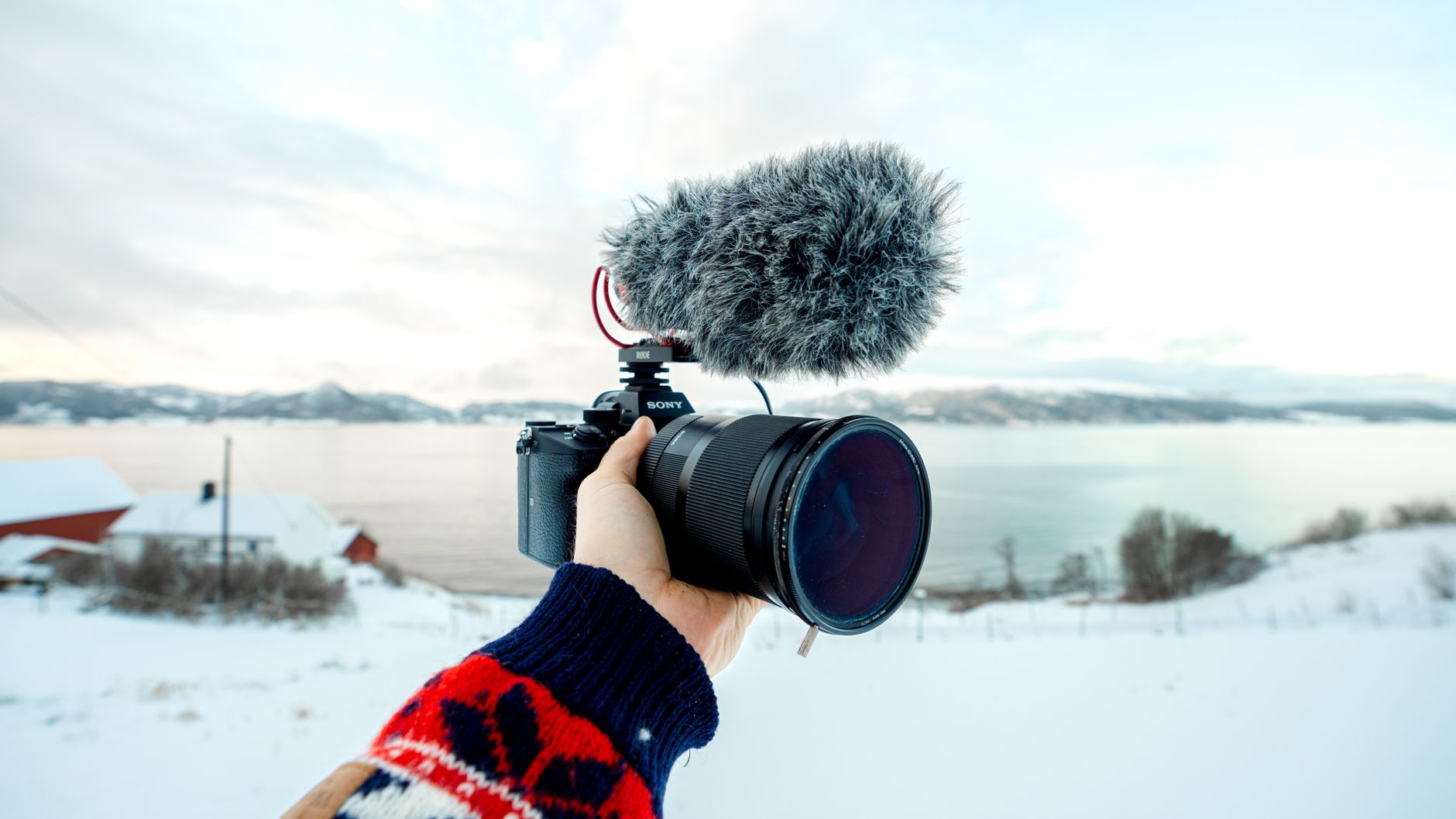
Breath is one of the most underrated elements in film sound. Learn how live breath detection from a phone microphone works, why it matters for production audio, and how you can put it to use right now on your next shoot or in your editing suite.
What Live Breath Detection Actually Does
The concept is straightforward. A phone microphone continuously monitors incoming audio and uses signal processing to identify the acoustic signature of human breath, distinguishing it from dialogue, ambient noise, or music. Some implementations add biofeedback, meaning the system doesn't just detect breath, it responds to it in real time, triggering visual cues, lighting changes, or audio events based on breathing patterns.
This isn't science fiction. In 2025 and into 2026, several independent developers started shipping mobile tools that do exactly this, running entirely on-device with sub-100ms latency. No external hardware required. Just your phone, a decent microphone, and the right app.
For filmmakers, the interesting question isn't how it works. It's what you can do with it.
Why Breath Matters in Production Audio
If you've spent any time behind a boom pole or sitting in a quiet edit suite, you already know that breath is both essential and problematic. A character's breath tells the audience everything about their emotional state without a single word. But unintended breath noise can ruin a clean dialogue take, bleed into a music recording, or create continuity problems between cuts.
Traditionally, handling breath in audio means one of two things: riding the gain (manually adjusting levels during recording) or cutting breath sounds in post using a DAW (Digital Audio Workstation, the software used for editing and mixing sound). Both approaches are reactive. You deal with breath after the fact.
Live breath detection flips that. The system knows breath is happening in real time. That changes your options entirely.
Real-time breath awareness lets you make decisions on set that used to require hours in post-production.
On-Set Applications: Lighting and Sound Together
Here's where it gets genuinely interesting for production. Combine live breath detection with a programmable lighting system, something like a Quasar Science RGB fixture or an Aputure NOVA P300c with DMX (Digital Multiplex, the standard protocol for controlling stage and film lighting remotely), and you have a system that responds to a performer's breath in real time.
I tested a rough version of this on a short film shoot earlier this year. We were doing a tense interrogation scene, and I wanted the lighting to feel slightly alive, almost like the room itself was nervous. We routed breath detection output from a phone placed near the actor into a simple MIDI (Musical Instrument Digital Interface, a protocol for sending control signals between devices) bridge, which then sent subtle intensity changes to our key light. When the actor's breathing quickened, the light pulsed very slightly. When they held their breath at a dramatic moment, the light held too.
The effect on camera was subtle but effective. The editor noticed it immediately in the cut. It gave the scene a quality that neither performance nor lighting alone would have achieved.
For music videos and performance pieces, this opens up a lot of territory. Breath-reactive lighting rigs. Real-time audio processing tied to a vocalist's breathing pattern. Dynamic set elements that respond to performer state without requiring a single click from an operator.
Practical Setup for Breath-Reactive Lighting
You don't need a massive budget to test this workflow:
- Use a lavalier (a small clip-on microphone) or a phone placed close to the subject for clean breath pickup
- Run breath detection software on a secondary phone or tablet so your primary audio recorder stays clean
- Use a MIDI or OSC (Open Sound Control, a protocol for real-time communication between devices) bridge app to convert breath events into control signals
- Connect those signals to a DMX controller or a smart lighting system that accepts external input
- Test your threshold settings before the take so false triggers from ambient noise don't fire your lights mid-scene
Post-Production: Smarter Breath Removal and Restoration
On the post side, breath detection has a more immediately practical use. Most dialogue editors spend a significant chunk of time hunting breath sounds manually, deciding which ones to keep for emotional texture and which ones to cut because they're distracting or inconsistent.
A breath detection system that can analyze a recorded audio file and generate a map of breath events, timestamped and labeled by intensity, saves real time. You're not scrubbing waveforms frame by frame. You're looking at a list of flagged events and making creative decisions about each one.
Some of the DAW plugins emerging in 2025 and 2026 are starting to incorporate this kind of analysis. Rather than blanket noise reduction that can make dialogue sound processed and unnatural, breath-aware tools let you make surgical decisions. Keep the small exhale before the emotional line. Cut the loud inhale that peaks the meter and pulls focus. Automate the process for long interview footage where doing it manually would take hours.
For documentary filmmakers especially, this is significant. Interview-heavy projects can have tens of hours of dialogue to clean. Any tool that accelerates that without degrading voice quality matters.
Using Biofeedback Creatively in Narrative Film
Beyond the technical applications, there's a more experimental creative possibility here worth taking seriously. Biofeedback has been used in performance art for decades. Film has been slower to adopt it, mostly because the technology required was expensive and unwieldy on set.
A phone-based breath detection system is neither of those things. It costs nothing extra if you already have a phone, which you do.
Imagine giving a performer real-time audio feedback through an earpiece based on their own breathing pattern. A very light tone or texture that responds to their breath rate, helping them regulate pacing during a long monologue, or consciously heightening tension by pushing their breath faster through an auditory cue. This is a legitimate performance tool, similar to techniques used in theater and voice coaching, now accessible during a film take.
Directors working with non-actors, or actors doing physically demanding scenes, could find this particularly useful. It's a way to give subtle direction without calling cut.
Breath detection turns a passive biological signal into an active creative tool that both performers and cinematographers can work with simultaneously.
Gear Considerations and Microphone Quality
The weak link in any phone-based breath detection system is the microphone. Built-in phone mics are fine for testing but they color the sound and their polar patterns (the direction from which a microphone picks up sound) aren't optimized for close, low-volume audio like quiet breathing.
For serious use, pair your phone with a dedicated external microphone. The DJI Mic 2 or the Rode Wireless GO II both offer clean, low-noise pickup that works well for this kind of application. If you're using the system in a controlled studio environment, a small-diaphragm condenser mounted on a short boom and connected via the phone's USB-C or Lightning port will give you far more reliable detection than any built-in mic.
Latency is also worth watching. For reactive lighting or sound effects, anything above 150ms starts to feel disconnected from the performance. Test your chain from mic input to output trigger before you commit to it on a real shoot.
Key Takeaways
- Live breath detection from a phone microphone is a real, working tool in 2026, not a concept
- On set, it enables breath-reactive lighting rigs using DMX-controlled fixtures without custom hardware
- In post, it can map breath events across recorded dialogue to speed up audio editing significantly
- For performance work, breath biofeedback through an earpiece is a legitimate direction tool for both actors and directors
- External microphone quality matters; a DJI Mic 2 or Rode Wireless GO II will outperform any built-in phone mic for reliable detection
Frequently Asked Questions
Q: Can I use breath detection on a busy film set with lots of ambient noise?
A: You can, but you'll need to be thoughtful about microphone placement and detection thresholds. A directional lavalier placed close to the performer filters out most ambient bleed. Spend time calibrating the sensitivity before the shoot so background noise doesn't trigger false events.
Q: Does this require coding or custom hardware to set up?
A: Not necessarily. Several mobile apps available in 2025 and 2026 handle breath detection natively. Connecting that output to a lighting system typically requires a MIDI or OSC bridge app, which is straightforward to configure with basic setup knowledge and no coding.
Q: Is breath-reactive lighting visible to the camera, or is it too subtle?
A: It depends entirely on how you dial it in. Very small intensity shifts, under 5 percent, read as almost subliminal on camera but still register emotionally in the edit. Larger swings become an obvious visual effect. Start subtle and push only as far as the scene needs.