
How to Choose the Right Lens for Music Video Production
The lens you choose shapes everything in a music video. Here's how to pick the right glass for the vibe, budget, and shoot you're actually facing.
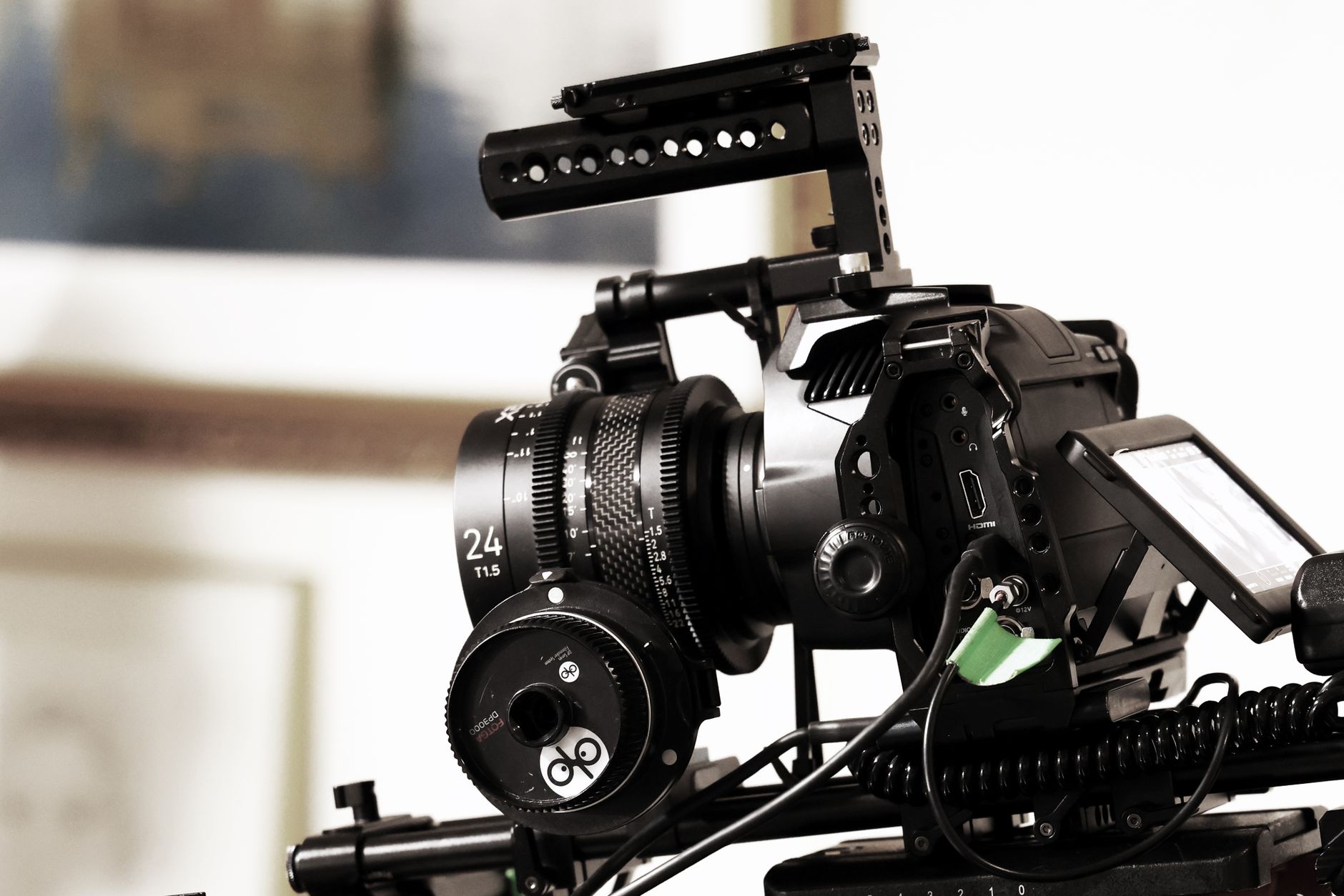
The lens you mount on your camera does more creative work than almost any other decision you'll make on a music video set. Get it wrong and the footage feels flat, generic, or just off. Get it right and the images carry the energy of the track before a single cut is made.
Why Lenses Matter More Than You Think in Music Videos
Music videos live and die by feel. A documentary crew needs to capture reality. A narrative filmmaker builds a world. But you, shooting a music video, need to translate sound into picture. The lens is your primary tool for that translation.
Focal length, aperture, and optical character (the way a lens renders light, contrast, and out-of-focus areas) all contribute to whether a shot feels intimate or distant, raw or polished, vintage or clinical. Before you even think about which specific lens to rent or buy, you need to answer one question: what does this song feel like?
A punishing metal track and a soft acoustic ballad should not be shot through the same glass. They probably shouldn't even share the same focal length philosophy.
Focal Length and the Emotional Language of Your Shots
Focal length is the distance (measured in millimeters) between the lens and the camera sensor, and it determines how much of the scene you capture and how perspective is compressed or stretched.
Wide lenses (14mm to 35mm) push you into the environment. They distort slightly at the edges, create a sense of space, and make the viewer feel present. If you're shooting an energetic performance in a warehouse, a 24mm or 28mm gets you close to the artist without losing the room. Wide lenses are your friends for high-energy, kinetic work.
Standard lenses (40mm to 60mm) sit closest to how human eyes perceive depth. The 50mm is the workhorse of narrative filmmaking for good reason. It feels natural, unfussy, and honest. For an artist-led video where performance and expression matter most, a 50mm at a wide aperture gives you real presence without distortion.
Telephoto lenses (85mm to 200mm and beyond) compress perspective, stack elements in the frame, and create a beautiful separation between subject and background. The 85mm is arguably the most flattering focal length for close-up performance work. It lets you maintain a respectful distance from the artist while pulling in tight, emotionally loaded framing.
The 85mm is the music video director's secret weapon. It flatters faces, compresses backgrounds beautifully, and gives your artist room to perform without a camera in their face.
Understanding Aperture: Depth of Field and Low-Light Performance
Aperture is the opening inside the lens that controls how much light hits the sensor. It's measured in f-stops, and lower numbers mean a wider opening. A lens that opens to f/1.4 or f/1.8 is a fast lens, meaning it performs well in low light and produces a very shallow depth of field (where only a thin slice of the image is in sharp focus, with the rest blurred).
For music videos, fast lenses are almost always the right call. Here's why:
- Music videos frequently shoot in challenging or atmospheric lighting, clubs, streets at night, candlelit spaces
- Shallow depth of field isolates your artist from the background and creates that cinematic look clients expect
- Fast glass gives your camera operator more flexibility to work with practical lights without killing the mood
If you're on a tight budget, a Canon 50mm f/1.8 or the Sony FE 50mm f/1.8 will do more for your images than a kit zoom ever could. Both are inexpensive, sharp wide open, and produce genuinely beautiful background blur (bokeh).
For higher-end productions, primes like the Sigma Art series (35mm f/1.4, 50mm f/1.4, 85mm f/1.4) punch well above their price point. They're sharp, have excellent rendering, and hold up next to much more expensive glass in a grade.
Vintage Glass vs. Modern Lenses: Choosing the Right Character
Modern cinema lenses are technically remarkable. The Zeiss Supreme Primes, the ARRI Signature Primes, the Canon CN-E series, these lenses are corrected within an inch of their lives. They're sharp, consistent, and color-matched across the set. For narrative work, that consistency matters enormously.
But for music videos, character sometimes beats technical perfection.
Vintage glass, old Helios 44 lenses, Super Takumars, Contax Zeiss primes, Soviet-era glass, brings aberrations, swirly bokeh, and subtle flares that no modern lens replicates naturally. That imperfection can translate to an organic, textured aesthetic that fits certain artists and genres perfectly.
When to reach for vintage glass
- The artist has a retro or analog aesthetic
- The track is lo-fi, indie, or deliberately rough-edged
- You want to distinguish the video from the hyper-clean look that dominates the feed
When to stick with modern glass
- The production needs consistent color across multiple camera bodies
- The director wants precision for VFX or compositing work
- The client expects a polished, commercial finish
You can rent vintage glass affordably at most rental houses, and adapters let you mount older glass on modern Sony, Canon, and RED bodies without issue.
Zooms vs. Primes: The Practical Reality on Set
The prime-versus-zoom debate never really ends, but here's my honest take from spending time on music video sets: primes make you think, zooms keep you moving.
Prime lenses (fixed focal length) force you to commit to a perspective. You move your body, your camera, your rig. That physical engagement often produces more intentional, interesting framing. Primes are also generally faster and optically superior at comparable price points.
Zoom lenses give you flexibility, which matters when your shoot day is compressed and your artist has limited time. The Canon 24-70mm f/2.8 or Sony 24-70mm GM (G Master) covers a huge range of useful focal lengths in one lens and performs beautifully at f/2.8. On a run-and-gun shoot where the artist is moving unpredictably, a good zoom lens is not a compromise. It's a smart tool.
A practical kit for most music video productions looks something like this:
- A wide prime (24mm or 35mm) for environmental shots and performance coverage
- A standard or short telephoto prime (50mm or 85mm) for close-up work and portraits
- A mid-range zoom (24-70mm) for versatility when the schedule tightens
Matching Your Lens to the Camera You're Shooting On
The sensor size of your camera changes how focal lengths behave. A 35mm lens on a full-frame sensor like the Sony FX3 or Canon EOS R5 C behaves like a 35mm. On a Super 35 or APS-C sensor, that same lens is effectively cropped, so a 35mm feels closer to a 52mm equivalent.
This crop factor matters when you're planning your lens kit. If you're shooting on an ARRI Alexa Mini LF (large format sensor), your 35mm suddenly feels significantly wider than it would on a Super 35 camera. If you're on a Sony FX6 or Blackmagic Pocket Cinema Camera 6K (which uses a Super 35 sensor), account for the 1.5x crop when building your focal length strategy.
Always confirm sensor size before you finalize your lens rental. It's a simple step that saves you from showing up on set with glass that doesn't behave the way you planned.
Your lens kit should be planned around sensor size, shooting environment, and the emotional tone of the track. Any other order of priorities is working backwards.
Key Takeaways
- Focal length carries emotional weight: wide lenses feel energetic and present, telephoto lenses feel intimate and compressed
- Fast aperture lenses (f/1.4 to f/2.8) are almost always the right choice for music videos due to lighting conditions and the need for separation
- Vintage glass can give your video a distinct aesthetic, but modern primes are the better call when consistency and technical precision matter
- Primes produce more intentional framing; zooms keep you moving on tight schedules. Know which you need before the shoot
- Always factor in your camera's sensor size when planning focal lengths. The same lens behaves differently on full-frame versus Super 35
Frequently Asked Questions
Q: What is the best single lens for a music video on a budget?
A: The 50mm f/1.8 in whatever mount fits your camera body is the best value lens in filmmaking, full stop. It's sharp wide open, produces beautiful separation, and works in low light. Canon, Sony, and Nikon all make versions under $250.
Q: Should I shoot a music video on prime lenses or zoom lenses?
A: Ideally both, but if you have to choose, it depends on your shoot structure. Controlled performance setups with a locked schedule favor primes. Loose, documentary-style shoots where the artist is spontaneous often call for a reliable zoom so you don't miss the moment.
Q: How do I know if vintage lenses will work on my camera?
A: Most vintage lenses can be adapted to modern mirrorless cameras using inexpensive adapters. A Nikon F-mount or M42 lens, for example, adapts easily to Sony E-mount or Canon RF-mount bodies. You'll likely lose autofocus, but music video work is almost always manual focus anyway, so that's rarely a problem.